
This post is brought to you by ‘hoarding things in the shed that you think will be useful for another project sometime’.
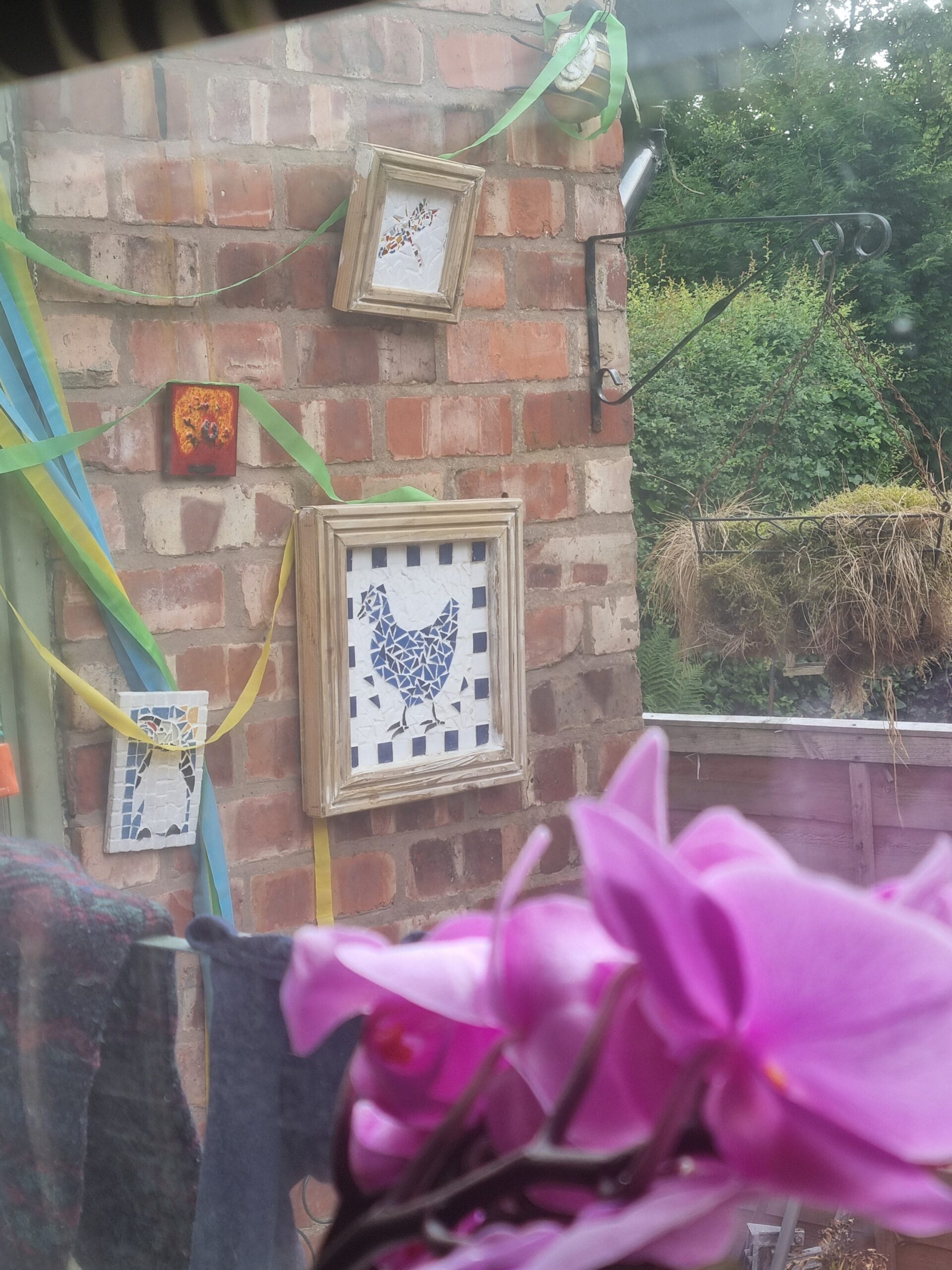
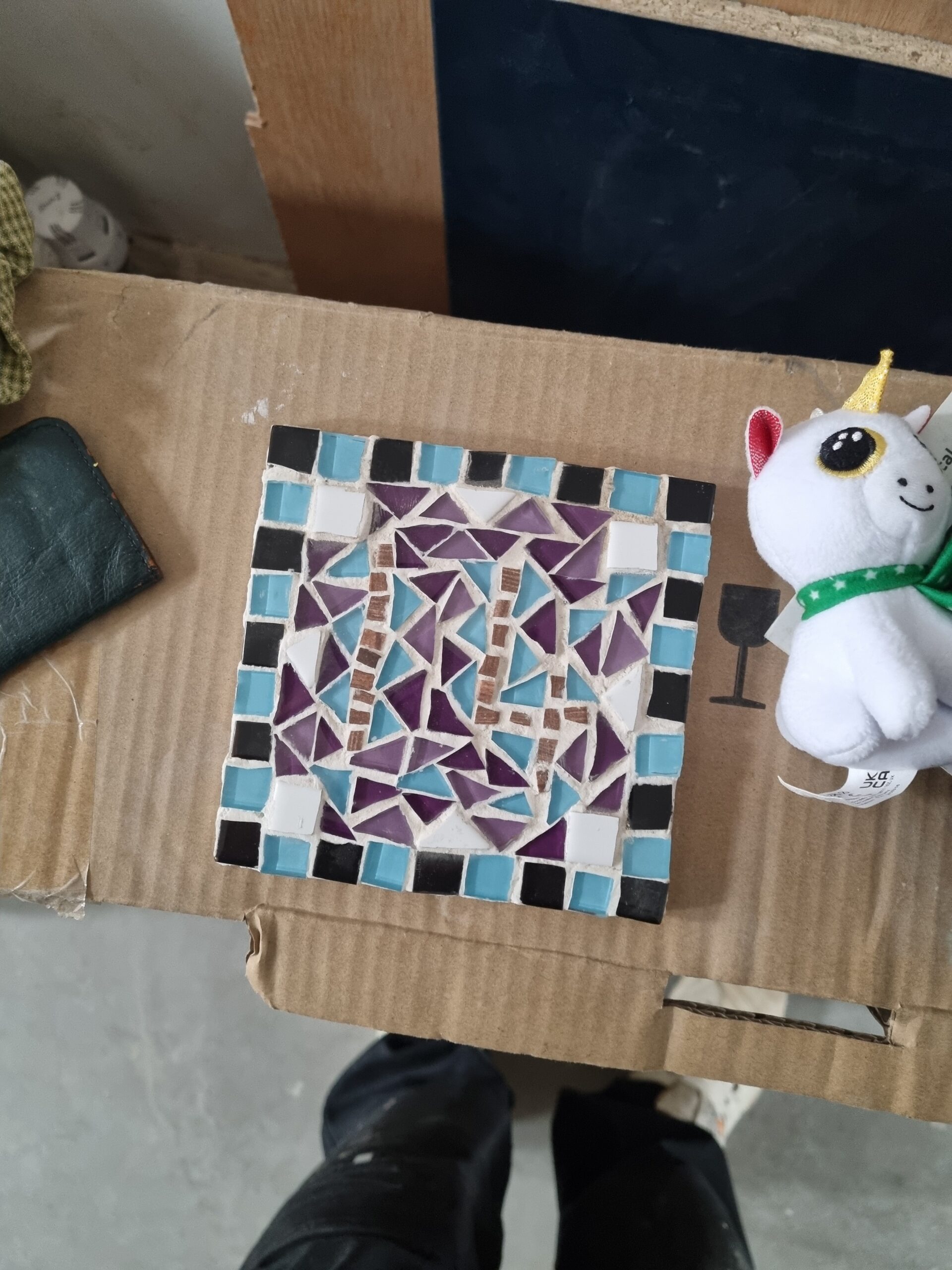
There’s something really satisfying about creating something beautiful from what others might throw away, and I think there’s something genetic about it because this post is showcasing some small hobby crafts that my Mum occasionally makes in her free time.
It starts with a dusty box of broken tiles and ends with something like a bowl,or decorative outdoor piece near the chicken coop.
Mosaics have this timeless quality, and if you’re thinking that the below instructions look complex and invested, then you can try it out with coloured paper, magazine cur outs or other bits you find lying around or at the shopping centre, and make a sketchbook work from it. You can always digitise it after. I digress.
Pick a Theme
Nature is full of patterns and forms that naturally lend themselves to mosaics. The’yre also not perfect shapes when you look individually, but as a whole they come together. Veins in leaves, spiral shells, rippling water, sunbursts, and even clusters of pebbles on the shore. These shapes can be abstracted or simplified really nicely into tile pieces, giving your mosaic a grounded, organic look. Nature gives you a ton to work with.
Step-by-Step: How to Make a Mosaic with Old Tiles
Gather Your Materials
- Old tiles (ceramic or porcelain are ideal)
- Tile nippers (if working in clean shapes) or a hammer (for erm…experimental work))
- Adhesive (tile glue or strong PVA for smaller projects)
- Grout (sand-based for wider gaps, unsanded for finer work)
- A base board or surface (MDF, plywood, or even terracotta pots)
- A pencil and sketchpad
- Safety gloves and goggles
- A dust mask (especially if breaking tiles indoors)
Optional: tweezers, sponge, cloth, and old rags for cleaning up grout
Choose a Natural Theme
Start with something simple like:
- A leaf with veins and stem
- A sunset over hills
- A flower head or seed pattern
- River pebbles or tide lines
Sketch out your design roughly on paper. Don’t overcomplicate it. Mosaics are built from fragments, so bold shapes work better than lots of fine lines.
Tip: Try sketching a few thumbnail versions first. You’ll start to get a feel for how to simplify complex shapes.
Prepare Your Base
Choose a sturdy base for your mosaic, something like a wooden panel or a stepping stone. Make sure it’s clean and dry. Try use a regular shape or use a saw to cut it.
Draw your final design lightly onto the surface using pencil or chalk. This becomes your map for placing the tiles.
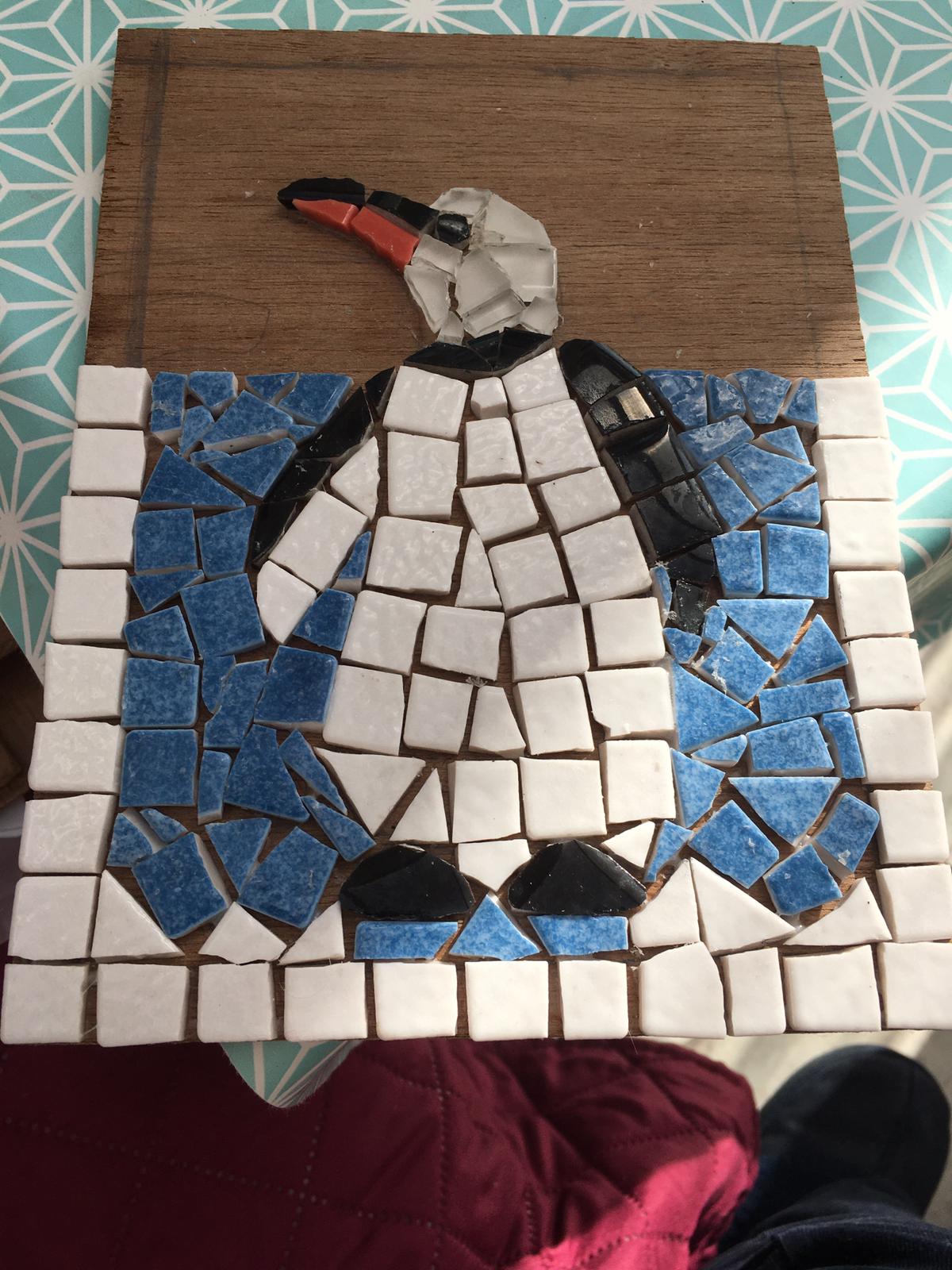
(Smash the living s..) Break or clip the Tiles and then Sort Them
The fun but messy part. Put on your gloves and safety goggles, and use a hammer or tile nippers to break the tiles into manageable shapes. Aim for a variety of sizes and edges, some curved, some angular. If you’re using a hammer this will happen naturally, if your nipping using a tool then this might be more deliberate. You can sort by colour, tone, or shape in old containers or trays.
If you’re going for a soft, natural flow, keep the edges irregular. For something more geometric, aim for neater pieces.
Start Laying the Tiles
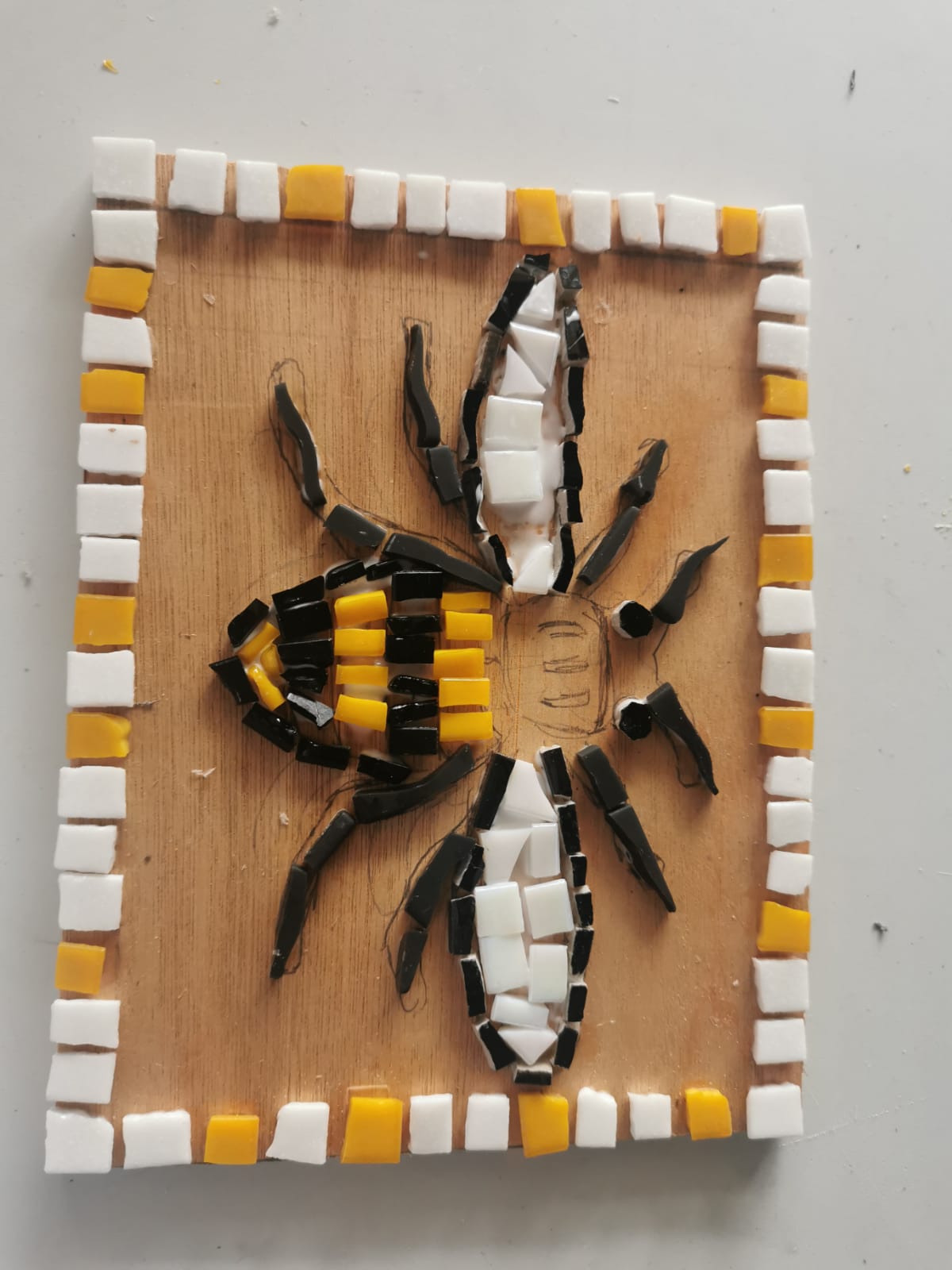
Don’t glue yet unless you have sketched out your design, or are confident to lay directly. Then, apply a small amount of adhesive to either the tile or the base (depending on the glue you’re using) and press the piece down firmly.
Work section by section. You can either start from the centre and move outwards, or outline the key shapes first like a stained glass window and fill in the rest.
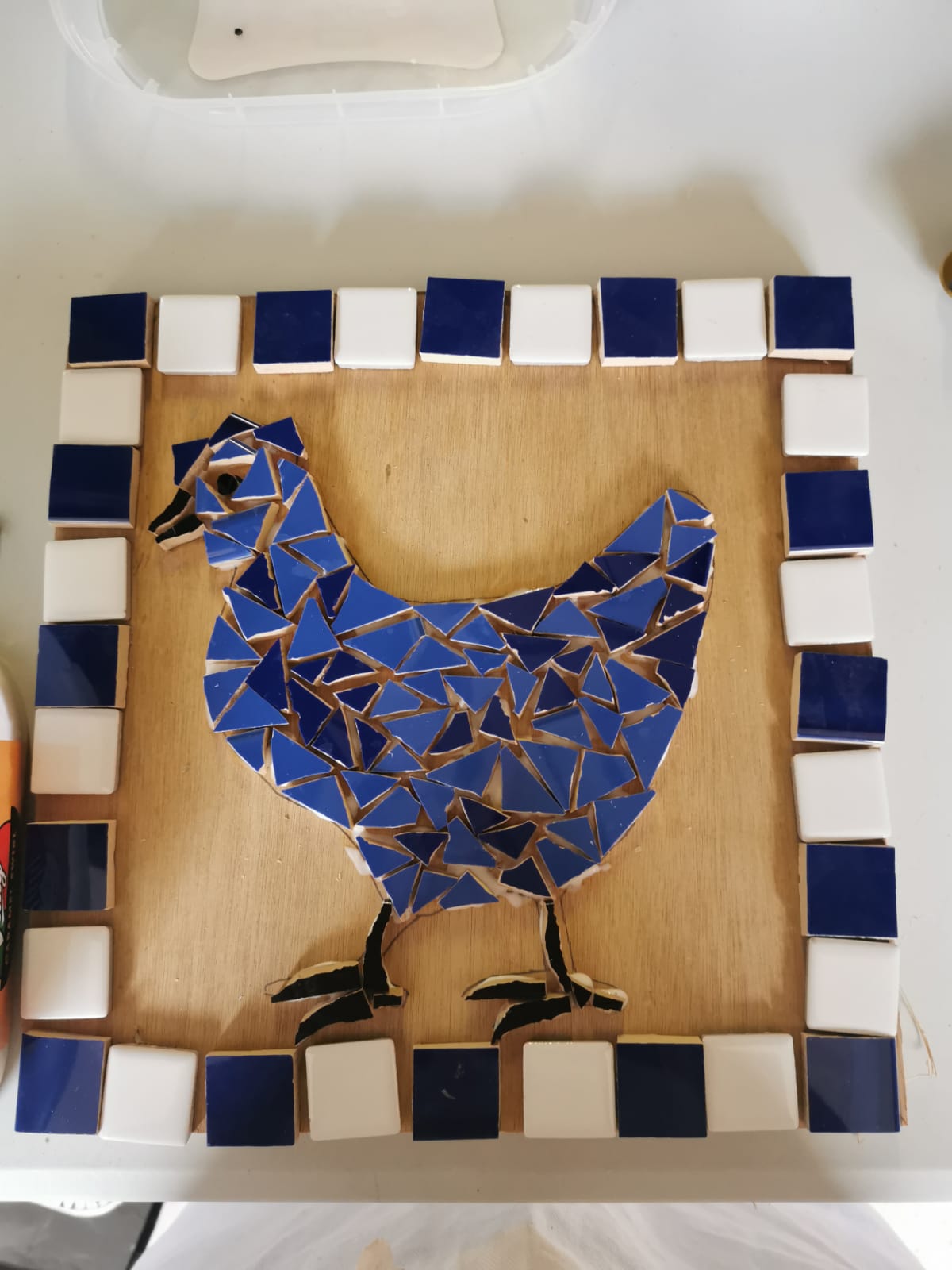
Leave a small gap between each tile for grout. Think about what colour the grout it and how that will impact your design. If its a small design then it might change the colour way a lot more than you expect.
Grouting
Once your adhesive is completely dry (check the label for drying time), mix and apply the grout using a spatula or your fingers (with gloves). Work it into all the gaps with a flat tool like an old gift card.
Wipe away the excess gently with a damp sponge before it sets too hard. Let it dry fully, then polish the surface with a dry cloth to bring back the shine of the tiles before it dries.
Grout is NOTORIOUSLY difficult to get off once its dried (and i found this out first hand via renovating my bathroom floor).
Finishing Touches
You might want to seal your piece depending on where it’s going, especially for outdoor mosaics. You can also paint the base edges or mount it in a simple wooden frame to give it a clean finish. If you want to seal it fully for outdoors the varnish goes on ANYTHING, and will protect it from the elements, but will also discolour over time.
Why It’s Worth Trying
Mosaic making is tactile, relaxing, and surprisingly absorbing. Like sketchbook work or painting in layers, it teaches patience and decision-making and it doesn’t have to be perfect. Similar to the other workshops on here around pottery and painting, its a very therapeutic process.
Some of the most interesting mosaics are asymmetrical or slightly off-centre. That’s part of the charm. Experiment.
Tips for First-Timers
- Keep your first design simple and no larger than an A4 sheet
- Go bold with colour contrasts it makes shapes pop
- Use an old tea towel when hammering tiles to avoid flying shards
- Try mosaic on a flowerpot or trivet before tackling a large panel
Have a go and let me know what you create.
#MosaicArt #NatureInspiredArt #RecycledArt #BrokenTileMosaic #UKArtists #CreativeReuse #SustainableArt #SketchToMosaic #TactileArt #ArtFromWaste #DIYArtProjects #HandmadeInUK
No responses yet